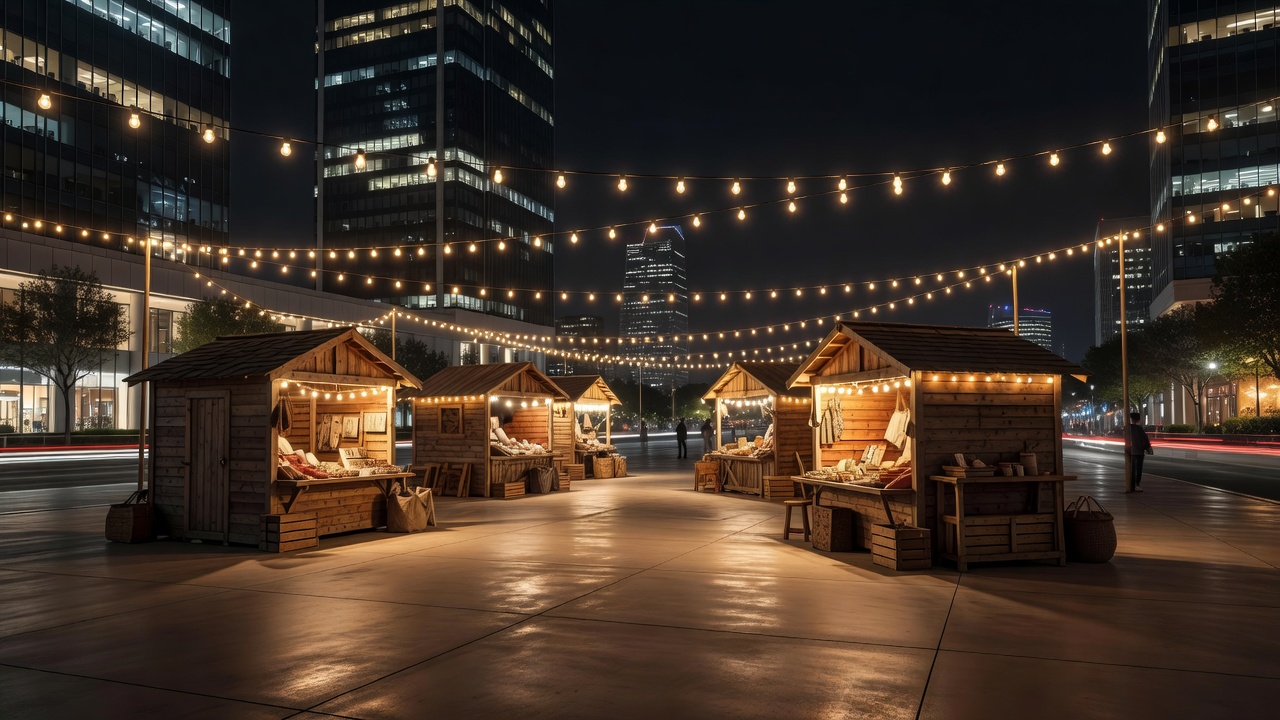
Most markets outside Europe are recent. Few go back further than the 1990s, and they arrive by one of three routes: a city with strong German heritage recreating something it remembers, a formal partnership between sister cities, or a commercial operator renting out huts in a public space.
Knowing which route produced a market tells you a lot about what you will find. A market run with a German partner city tends to import its food, crafts and even some of its traders. A commercial winter village is closer to an outdoor shopping fair with seasonal lights. Neither is wrong, but they suit different travellers, and it helps to know before you build a trip around one.
Chicago runs the most faithful copy in the United States
- Chicago, Illinois
- Daley Plaza, the Loop
- Since 1996
Chicago's Christkindlmarket opened in 1996 in Daley Plaza, in the heart of the Loop, and was modelled on Nuremberg's. It reflects the city's large German-American history. Stalls sell German-style ornaments, nutcrackers and wooden toys, and food runs to bratwurst, potato pancakes, pretzels and stollen. Glühwein comes in a collectible mug whose design changes each year, and many locals keep a shelf of them. Additional locations have opened in other parts of the Chicago area in recent years.
Be prepared for real cold. December in Chicago can be bitter, with wind coming off Lake Michigan, and the plaza is exposed. Weekday lunchtimes bring office workers; evenings and weekends are busier still.
New York's markets are holiday shopping, not ritual
- New York City
- Bryant Park, Union Square and others
New York has several seasonal markets, the best known being the Winter Village in Bryant Park, which pairs a free-admission ice rink with rows of glass-sided kiosks, and the Union Square Holiday Market near the subway hub. Both sell mostly independent design, jewellery, prints and food from local makers. They are good places to shop and easy to fit into a city break, but they are not trying to be German markets. If you want mulled wine and carved figures, you will find a little; if you want gifts that you could not buy at home, they are stronger than many European markets.
Philadelphia sits between the two models
- Philadelphia, Pennsylvania
- Around City Hall and LOVE Park
The Christmas Village in Philadelphia describes itself as a German-style market and has wooden huts, German food and imported ornaments, set beside City Hall. Pennsylvania has deep German roots, going back to eighteenth-century settlers, and the market leans on that history. It is smaller than Chicago's and easy to combine with the city's museums.
Quebec City has the most European setting in North America
- Quebec City, Canada
- Old Quebec, near City Hall
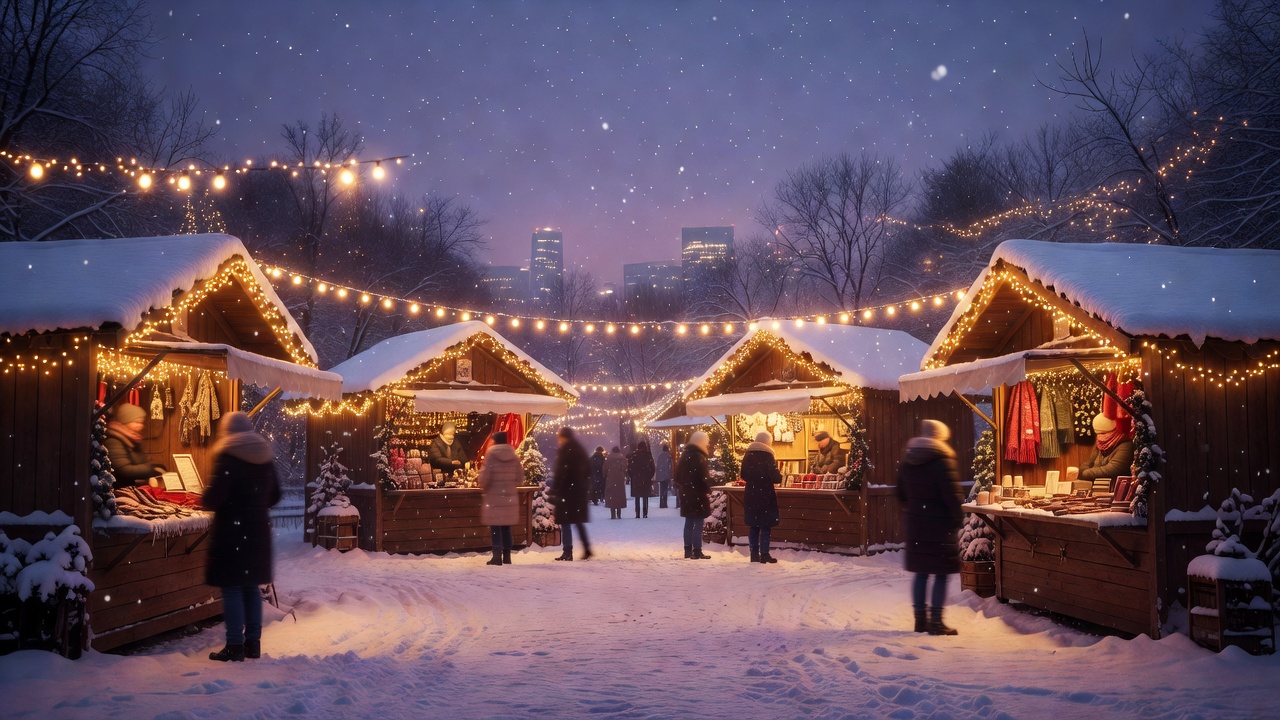
The German Christmas Market in Quebec City takes place in the old walled city, which is a UNESCO World Heritage site. Stone buildings, narrow streets and reliable snow give it a look closer to Central Europe than any other North American market. The huts sell German and Québécois food and crafts, and French is the everyday language, which adds a further twist. Dress for serious cold.
Toronto's winter village fills an industrial district
- Toronto, Canada
- Distillery District
The Distillery Winter Village sets its stalls among the brick buildings of a restored Victorian industrial complex, now a pedestrian area of galleries and restaurants. It has become one of the busiest seasonal events in the city. Popularity has brought crowd management, and on busy evenings entry arrangements may change, so check the organiser's current rules before going. The atmosphere is festive rather than traditional, with Canadian makers alongside the lights.
Sapporo's market is a gift from Munich
- Sapporo, Japan
- Odori Park
- Sister city of Munich since 1972
Sapporo and Munich became sister cities in 1972, the year Sapporo hosted the Winter Olympics and Munich the Summer Games. The Munich Christmas Market in Sapporo, held in Odori Park, is a direct product of that partnership, with German food, ornaments and Glühwein. Hokkaido winters are snowy, and the market overlaps with the city's winter illuminations along the same park, so the two make a single evening out.
Yokohama and Tokyo blend markets with illuminations
- Yokohama · Tokyo, Japan
In Japan, Christmas is a secular season associated with lights, couples and special meals rather than a family religious holiday. Markets reflect that. The Christmas market at Yokohama's Red Brick Warehouse, a restored harbour building, has become a well-known seasonal fixture, and German-style markets have appeared in Tokyo in recent years in places such as Hibiya Park and Roppongi Hills. Expect excellent food, orderly queues, and an emphasis on illumination over craft.
Ask who runs a market before you ask how big it is. The answer predicts almost everything you will find in the stalls.
Basalt Berry Orchard, editorial note
What about Christmas in summer?
In Australia, New Zealand, South Africa and much of South America, December falls in summer. Christmas fairs and night markets do take place in many cities, but without the cold, the hot drinks and the early darkness, the European model does not translate directly. They are usually closer to evening craft fairs. If the winter atmosphere is the point of your trip, the Northern Hemisphere is the realistic choice.
How to judge an overseas market before you travel
- Check who organises it: a city partnership, a cultural association or a private company.
- Look at the trader list, if published. Imported German goods and regional makers tell different stories.
- Find out whether entry is free at all times or ticketed on busy evenings.
- Read the current season's dates; many overseas markets close earlier than European ones, and some open in mid-November.
- Consider the weather. Chicago and Sapporo can be far colder than Nuremberg.
For context on the originals these markets imitate, compare them with our German city profiles. For timing and packing, see planning a market trip.