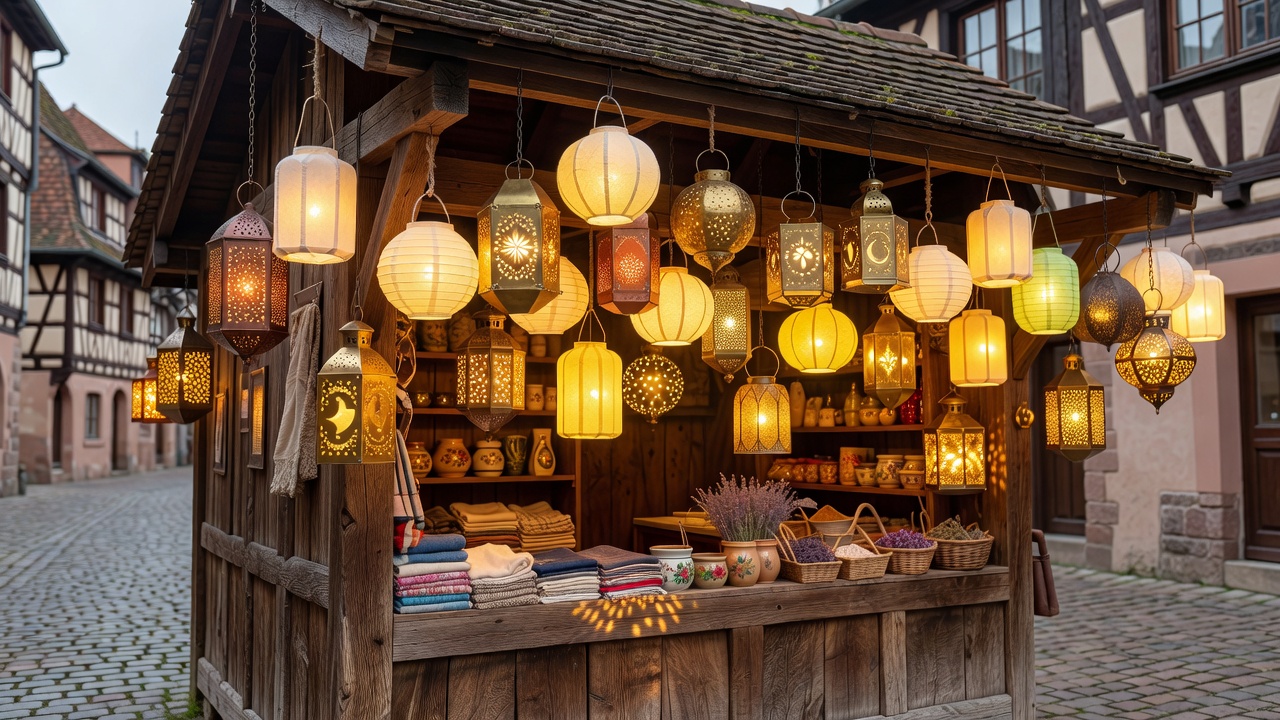
Outside Germany, Christmas markets follow two broad patterns. In places with a shared Germanic history, such as Alsace, Austria and parts of Switzerland, the market is old and local. Further east and north, many markets are more recent revivals that borrow the German format and fill it with national food and crafts.
Both kinds can be excellent. The difference matters mainly for expectations: a Prague or Budapest market is a lively seasonal fair in a beautiful square, while Strasbourg or Vienna can feel like a continuation of something centuries old. The profiles run roughly west to east.
Strasbourg calls itself the capital of Christmas
- Strasbourg, France
- Grande Île, around the cathedral
- Since 1570
The Christkindelsmärik has been held since 1570, which makes it one of the oldest markets in the French-speaking world. Today it is spread across a dozen or so squares on the Grande Île, the river island that forms the historic centre and is a UNESCO World Heritage site. The main clusters are on Place Broglie and around the cathedral, and a very large tree is raised on Place Kléber.
Alsatian specialities give the stalls their identity: Bredele, small butter biscuits baked in dozens of shapes; vin chaud made with local white or red wine; pain d'épices; and bretzels. In recent years the city has used security checks at entry points to the island during the market, so allow time when arriving, particularly at weekends.
Colmar is the quieter Alsatian alternative
- Colmar, France
- Several small markets in the old town
- About 30 minutes by train from Strasbourg
Colmar runs several small markets in its old town, including one in the canal-side district known as Little Venice. The half-timbered houses are painted in strong colours and the scale is human: you can cover everything on foot in a few hours. Colmar fills up too, but it is calmer than Strasbourg after dark, and the regional train between the two makes it easy to see both in one stay.
Basel brings the Alsatian tradition across the Swiss border
- Basel, Switzerland
- Barfüsserplatz and Münsterplatz
Basel's market occupies two squares in the old town, Barfüsserplatz and the cathedral square, Münsterplatz. Look for Basler Läckerli, a hard spiced honey biscuit with candied peel. Prices are Swiss prices, but the market is orderly and the city sits at the meeting point of France, Germany and Switzerland, which makes it a natural last stop on an Alsace route.
Vienna treats Advent as a season of many markets
- Vienna, Austria
- Rathausplatz, Schönbrunn, Spittelberg, Am Hof and more
- Often opens mid-November
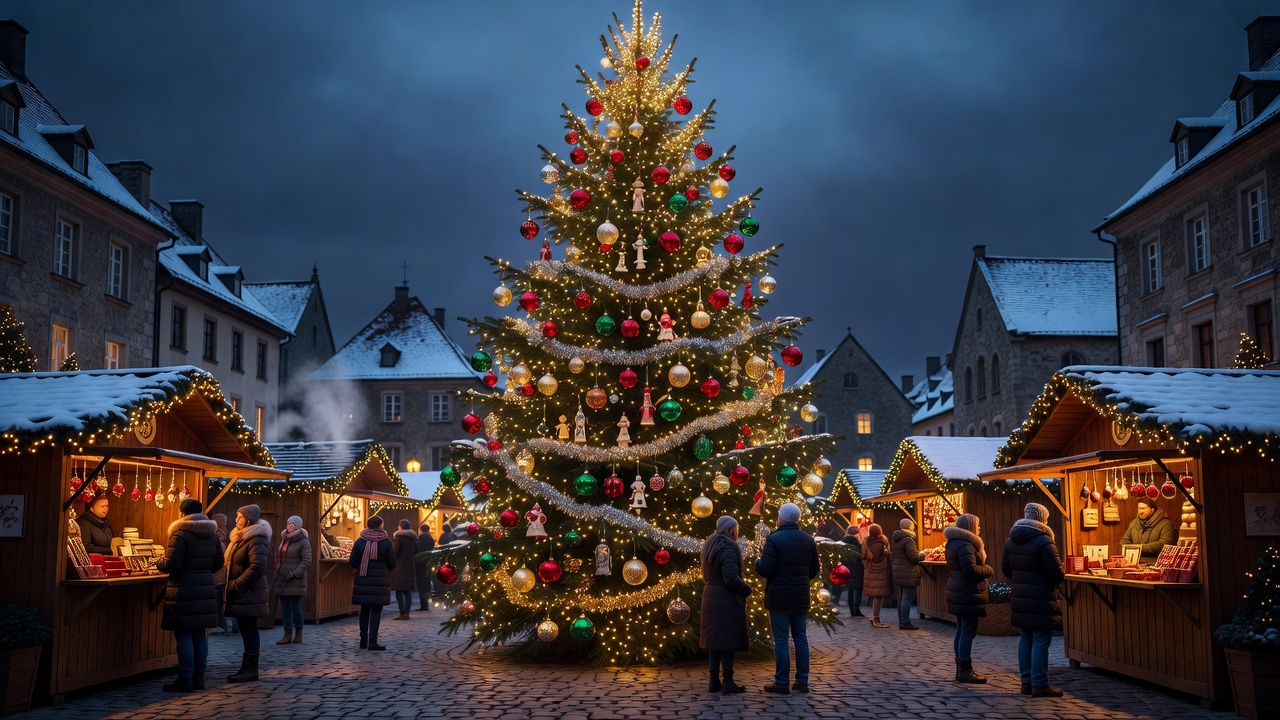
Vienna's largest market fills the park in front of the neo-Gothic City Hall on Rathausplatz, often opening in mid-November, earlier than most German markets. It is big and busy. More rewarding for many visitors are the smaller ones: the market in front of Schönbrunn Palace, the craft-focused stalls in the narrow lanes of Spittelberg, and the market on Am Hof. Viennese markets lean towards Punsch, a hot fruit-and-spirit drink, alongside Glühwein.
Salzburg adds music to the market
- Salzburg, Austria
- Domplatz and Residenzplatz
The Christkindlmarkt spreads across the cathedral square and the neighbouring Residenzplatz, framed by baroque architecture with the fortress above. Choirs and brass ensembles often perform during Advent. The carol "Stille Nacht" ("Silent Night") was first performed in 1818 in Oberndorf, a short trip north of the city, and visitors often combine the two.
Prague is a fair in a spectacular square
- Prague, Czechia
- Old Town Square and Wenceslas Square
- Often runs into early January
The main market on Old Town Square sits between the Týn Church and the Old Town Hall with its astronomical clock, and the setting is hard to beat. The goods are more mixed: some stalls sell Czech glass, wooden toys and puppets, others sell souvenirs. Svařák is the local mulled wine. The trdelník, a spit-roasted dough spiral, is everywhere, but it is a recent tourist favourite rather than a traditional Czech Christmas food. A genuinely local custom is the sale of live carp from tubs on street corners in the days before Christmas, since carp is the traditional Christmas Eve dish.
Budapest is generous with food
- Budapest, Hungary
- Vörösmarty tér and St Stephen's Basilica
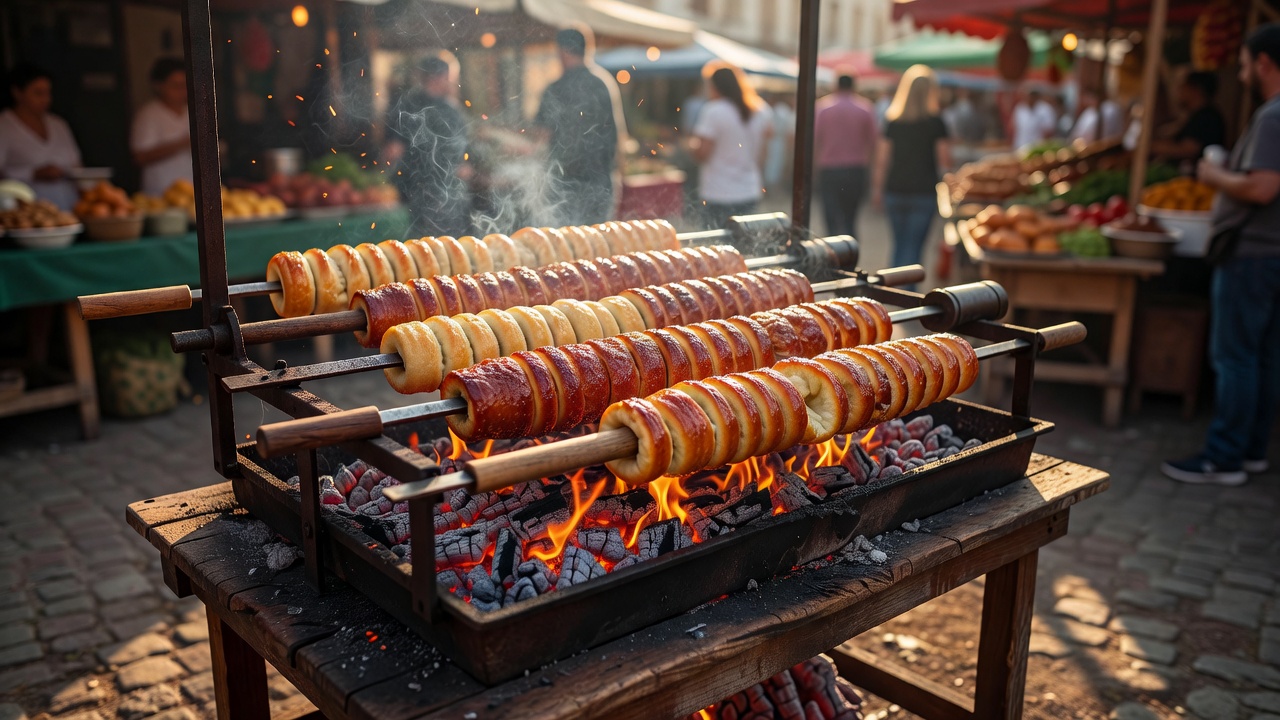
Budapest has two main markets in Pest. The one on Vörösmarty tér is the older and more craft-focused; the one in front of St Stephen's Basilica is known for its festive atmosphere and, in recent years, light projections on the basilica facade. Hungarian markets are serious about hot food: lángos (fried dough with sour cream and cheese), stuffed cabbage, sausages, and kürtőskalács, the chimney cake baked over coals. Mulled wine here is forralt bor.
Kraków adds a craft recognised by UNESCO
- Kraków, Poland
- Main Market Square
The market on the Main Market Square sits beside the Cloth Hall and St Mary's Basilica. Kraków's distinctive contribution is the szopka, an elaborate nativity scene built in the form of the city's own church towers, in foil and bright colours. The craft was added to UNESCO's list of intangible cultural heritage in 2018, and an annual competition takes place in early December, after which the entries are displayed.
Tallinn and Copenhagen show the northern versions
- Tallinn, Estonia · Copenhagen, Denmark
Tallinn's market sits on Town Hall Square in a medieval old town. The city claims one of the earliest public Christmas trees, citing records from 1441, though Riga makes a rival claim and historians debate both. The market is compact and snowy more often than markets further south. In Copenhagen, the Tivoli Gardens amusement park reopens for a Christmas season with stalls and lights, and there are smaller markets around Nyhavn. Try gløgg, mulled wine with raisins and almonds, and æbleskiver, round pancake balls.
Brussels mixes a market with a light show
- Brussels, Belgium
- Grand-Place to Sainte-Catherine
The city's winter festival runs stalls from the area around the Bourse to Place Sainte-Catherine, with a tree and a sound-and-light show on the Grand-Place. Belgian waffles, croquettes and local beers replace some of the German staples. Brussels is a convenient link between Paris, London and the Rhineland by high-speed train.
East of Vienna the stalls look familiar, but the food tells you exactly which country you are in.
Basalt Berry Orchard, editorial note
Choosing a European region
For the strongest sense of tradition, choose Alsace (Strasbourg, Colmar, Basel) or Austria (Vienna, Salzburg). For a grand setting and hearty food at lower prices, Prague, Budapest and Kraków are good value. For something quieter and colder, look north to Tallinn. Our planning page lists the rail links between these cities, and the Germany profiles cover the markets just across the Rhine.