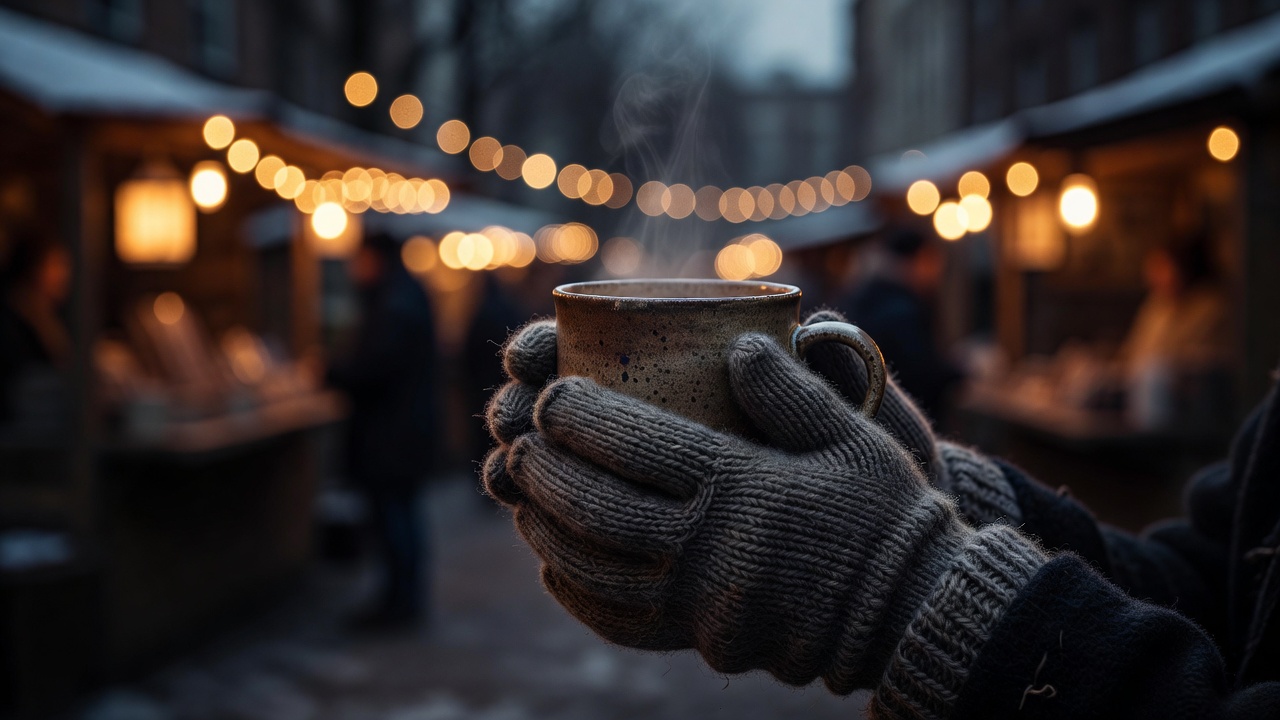
A good market trip is mostly a question of timing. The same square can be pleasant at eleven on a Tuesday morning and almost impassable at seven on a Saturday evening.
This page collects the practical points that apply across the cities in our Germany, Europe and worldwide profiles: when markets usually open, how to avoid the worst crowds, how payment works, and how to link several cities by train.
Most markets follow the Advent calendar, with local variations
The traditional market season is Advent, the four weeks before Christmas. In practice, many markets open a few days before the first Sunday of Advent, which falls between 27 November and 3 December. Some open earlier, a few run past Christmas. The table shows typical patterns from recent years. It is a guide only: every city confirms its dates each year.
| Market | Usually opens | Usually closes |
|---|---|---|
| Nuremberg | Friday before first Advent | 24 December |
| Dresden | Late November | 24 December |
| Cologne | Late November | Around 23 December |
| Strasbourg | Late November | 24 December |
| Vienna (Rathausplatz) | Mid-November | Around 26 December |
| Prague | Late Nov or early Dec | Early January |
| Chicago | Mid-November | Around 24 December |
Opening hours are typically from late morning to around 9 p.m., with shorter hours on Christmas Eve. Many markets close on Christmas Day and stay closed afterwards; post-Christmas "winter markets" are a different, usually smaller event.
Weekdays and opening hours are your best tools against crowds
Crowds build through the season and peak on Saturday evenings in mid-December. If you can, plan your main market visits for Monday to Thursday. The first week after opening is often calmer than the last two weeks before Christmas. Within a day, the hour after opening is the quietest; the stalls are ready, the light is softer, and you can actually talk to the traders. Come back at dusk if you want the lit-up atmosphere, and accept that it will be busier.
Coach tours tend to arrive in small, photogenic towns such as Rothenburg ob der Tauber or Colmar in the middle of the day. Staying overnight lets you see them early or late, when day visitors have gone.
Mug deposits, cash and cards
Most European markets serve hot drinks in reusable mugs with a deposit. You pay a small extra amount with your first drink, and you either return the mug to any stall from the same market for a refund or keep it. Each market, and sometimes each year, has its own design. Return mugs to a stall of the same market, as neighbouring markets in one city may use different mugs.
Carry some cash. Card and contactless payment have spread widely, but smaller craft stalls, rural markets and parts of Central and Eastern Europe still prefer cash. Outside the eurozone, remember that Czechia, Hungary, Poland, Denmark and Switzerland use their own currencies.

Linking market cities by rail
Central Europe's rail network makes multi-city trips easy without a car. Journey times below are approximate and depend on the train you choose; check the operators' timetables for exact connections.
- Alsace and Basel: Strasbourg to Colmar is about half an hour by regional train, and Colmar to Basel is under an hour.
- The Rhineland: Cologne and Aachen are less than an hour apart, and Aachen sits next to Maastricht and Liège.
- Bavaria and Salzburg: Munich to Salzburg takes roughly one and a half to two hours. Nuremberg to Munich is about an hour on the fastest trains.
- Franconia: Rothenburg ob der Tauber is reached from Nuremberg by regional trains with a change, in roughly one and a half to two hours.
- Saxony and Bohemia: Dresden to Prague along the Elbe valley takes a little over two hours.
- The Danube: Vienna to Budapest takes about two and a half hours.
River cruises along the Rhine and Danube also run themed market itineraries in December. They suit travellers who want to avoid packing and unpacking, at the cost of shorter time ashore in each city.
Two markets a day is plenty. The third one is usually where the evening turns from pleasant into tiring.
Basalt Berry Orchard, editorial note
Sample routes for a long weekend or a week
Four days: Alsace
Strasbourg for two nights, with a day trip to Colmar, then on to Basel for the final night. Compact, well connected and strong on tradition.
Five days: Franconia and Bavaria
Nuremberg for two nights, one night in Rothenburg, then Munich with an optional day in Salzburg.
Six days: Saxony to the Danube
Dresden, then Prague, then onward by train or a longer connection to Vienna and Budapest if time allows. This route covers very different market styles.
Clothing, food and getting around on foot
You will stand outside for hours, often on cobblestones that may be wet or icy. Waterproof shoes with good grip matter more than a heavy coat. Layers work best because you will move between cold squares and warm churches, museums or cafés. Thin gloves that still let you hold a mug and handle coins are useful.
Most stalls list ingredients only briefly. If you have allergies, ask the trader directly, and remember that many baked goods contain nuts. Vegetarian options have become more common, from potato fritters to mushroom dishes, but choice still varies a lot between markets. Alcohol-free drinks such as Kinderpunsch or hot apple juice are widely available.
Crowded squares attract pickpockets. Keep valuables in an inside pocket and be careful when paying. Many cities now place barriers and bag checks at market entrances; allow a few extra minutes and carry a small bag.
What survives the trip home
Wooden crafts, textiles and paper stars travel well. Glass ornaments, such as the mouth-blown baubles associated with Lauscha in Thuringia, need careful wrapping. Packaged biscuits and gingerbread usually travel fine, but rules on meat, dairy and some other foods vary by country, so check what your destination allows before buying sausages or cheese to take home. Liquids such as bottled mulled wine or schnapps must follow airline limits for hand luggage, so pack them in checked baggage.
Questions not covered here are answered on our FAQ page.