Germany has more Christmas markets than any visitor could see in one December. Almost every town with a market square puts up huts during Advent, and large cities often run several markets at once.
That abundance is the difficulty. It is easy to spend a long weekend moving between markets that feel interchangeable, with the same imported ornaments and the same sausage stands. The six profiles below focus on places where the setting, the local food or a regional craft tradition gives the market a reason to exist beyond mulled wine.
A note on dates: most German markets open in the last week of November, often a few days before the first Sunday of Advent, and close on 23 or 24 December. Some continue as "winter markets" until the new year. Each city sets its dates annually, so confirm them with the city or tourism office before booking.
Nuremberg keeps its market deliberately traditional
- Nuremberg
- Hauptmarkt, old town
- Typical season: late Nov – 24 Dec
The Christkindlesmarkt fills the Hauptmarkt below the Frauenkirche, and its opening evening is a civic event. The Nuremberg Christkind, a young person chosen by the city for a two-year term, reads a prologue from the church gallery to the crowd below. The market is known for being strict about what may be sold. Organisers favour traditional goods, and mass-produced plastic decorations are discouraged, which gives the rows of red-and-white striped roofs a coherence that many larger markets lack.
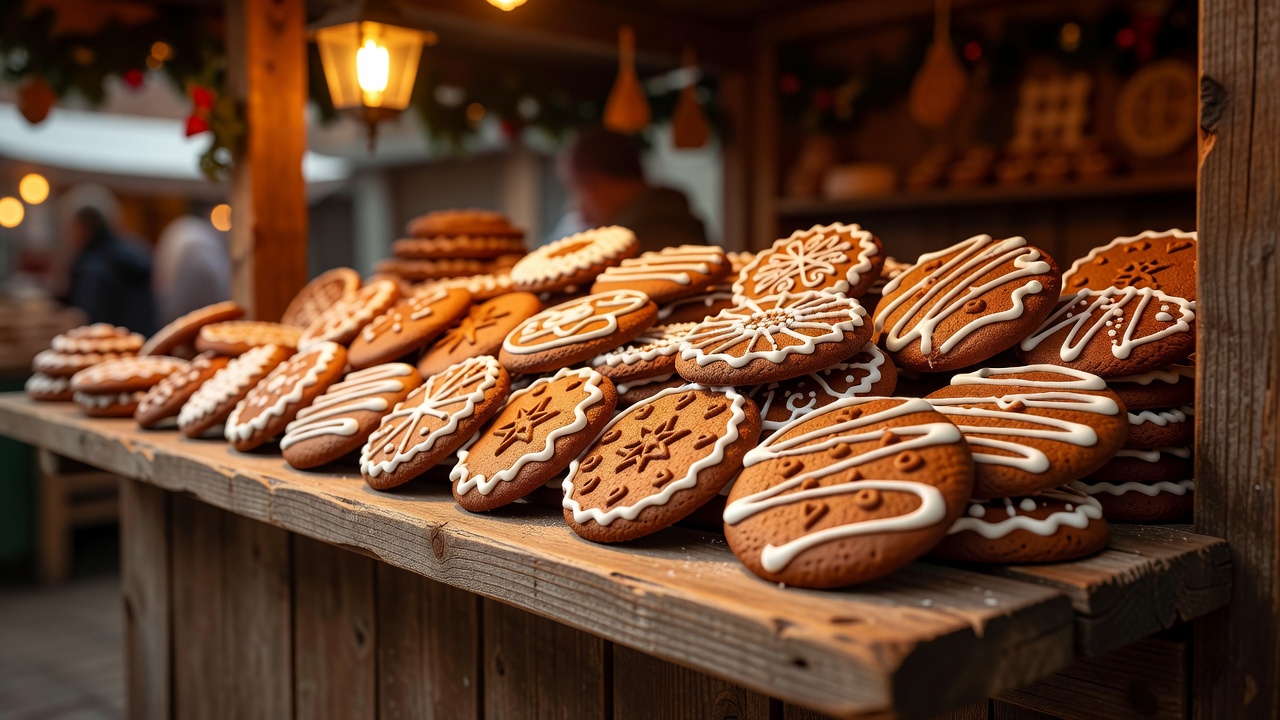
Food here is specific to the city. Nürnberger Rostbratwürste are finger-length sausages, traditionally served three in a bread roll. Nürnberger Lebkuchen, a soft spiced gingerbread often baked on a thin wafer base, carries protected geographical status in the EU, so the name can only be used for gingerbread made in the city. Look also for Zwetschgenmännle, small figures assembled from dried prunes, figs and nuts. A separate children's market and a market of Nuremberg's partner cities, where stalls from twin towns sell their own specialities, sit a few minutes' walk away.
Expect heavy crowds on Saturday afternoons and on the opening night. Arriving late on a weekday morning gives you room to look at the stalls properly; evenings bring atmosphere but very little elbow room.
Dresden is where Stollen and Ore Mountain carving meet
- Dresden
- Altmarkt, plus several smaller markets
- First recorded: 1434
The Striezelmarkt on the Altmarkt is one of the oldest documented Christmas markets in Germany, with its first recorded edition in 1434. The name comes from Striezel, an old local word for the fruit bread now known as Dresdner Stollen. On a Saturday in early December the city holds a Stollen festival, when an enormous loaf is paraded through the centre and cut into portions.
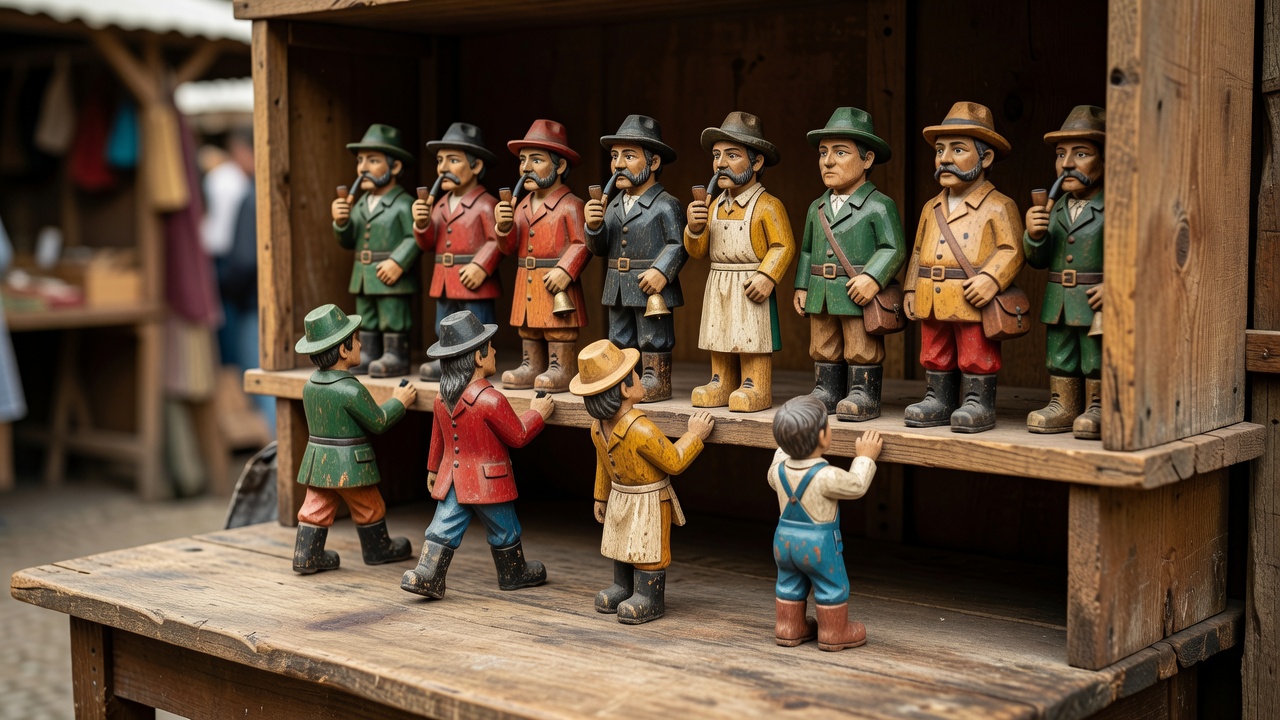
The other reason to come is craft. Dresden is the capital of Saxony, and the nearby Erzgebirge (Ore Mountains) has a long woodworking tradition: candle arches called Schwibbögen, incense smokers shaped like miners and tradesmen, nutcrackers and tiered Christmas pyramids turned by the heat of candles. The Striezelmarkt usually has a giant walk-around pyramid at its centre. Many-pointed paper stars from Herrnhut, also in Saxony, hang over several stalls.
Dresden runs other markets at the same time, including one on the Neumarkt in front of the rebuilt Frauenkirche and a medieval-themed market in the Stallhof courtyard of the Residenzschloss. They are close enough to see in a single evening.
Cologne offers variety within a short walk
- Cologne
- Several markets across the centre
- Typical season: late Nov – 23 Dec
Cologne does not have one market so much as a cluster. The best known sits on Roncalliplatz, directly beside the cathedral, under a canopy of lights strung between the stalls. In the old town, the market around the Alter Markt and Heumarkt draws on the local legend of the Heinzelmännchen, house gnomes who were said to finish the townspeople's work at night. Smaller markets have taken place on the Neumarkt with an angel theme and along the Rhine near the chocolate museum.
The advantage is choice: if one market is packed, another is a ten-minute walk away. The drawback is scale. Cologne sits on major rail lines from Belgium, the Netherlands and the rest of Germany, and weekend crowds can be intense around the cathedral. Weekday evenings are noticeably calmer.
A market in a cathedral square at dusk and a market spread along shopping streets are not the same trip, even when the mugs look alike.
Basalt Berry Orchard, editorial note
Munich splits its market by theme
- Munich
- Marienplatz and nearby squares
- Typical season: late Nov – 24 Dec
The main Christkindlmarkt spreads out from Marienplatz beneath the neo-Gothic New Town Hall. Nearby, a specialised market for nativity figures, the Kripperlmarkt, has long been part of the city's Advent, and is a good place to understand how seriously Bavaria takes crib-making. A medieval market has also run on Wittelsbacherplatz in recent years. Separately, the Tollwood winter festival on the Theresienwiese mixes stalls with performances and has a different, more contemporary feel.
Munich works well as a base: Salzburg is within easy reach by train, and the city's markets are compact enough to cover in an afternoon.
Rothenburg ob der Tauber rewards an overnight stay
- Rothenburg ob der Tauber
- Old town market square
- Small, walled town
Rothenburg's Reiterlesmarkt is small, and the market itself is not the main attraction. The setting is: a walled medieval town of half-timbered houses on the Romantic Road in Franconia. The local pastry, the Schneeball, is a ball of fried dough strips dusted with sugar or coated in chocolate. During the day the town fills with coach tours and day visitors. If you stay the night, you see the lanes after they leave, which is when the place makes most sense.
Aachen is a market on three borders
- Aachen
- Around the cathedral and town hall
- Near Belgium and the Netherlands
Aachen's market wraps around the cathedral, where Charlemagne is buried, and the town hall. The local speciality is Aachener Printen, a firm spiced biscuit that, like Nuremberg's Lebkuchen, has EU protected status. Because Aachen lies where Germany meets Belgium and the Netherlands, it pairs easily with Maastricht or Liège, and with Cologne, which is a short train ride east.
Habits you will meet at almost every German market
Drinks are served in ceramic or glass mugs that carry a deposit, called Pfand. You pay it with the first drink and get it back when you return the mug, or you keep the mug as a souvenir. Glühwein is the standard red mulled wine; white versions are common too. Kinderpunsch is an alcohol-free fruit punch, and Eierpunsch is a warm egg-based drink. At some markets you will see Feuerzangenbowle, in which a rum-soaked sugar cone is set alight above a pot of mulled wine.
Cash remains useful, especially at smaller stalls, although card payment has spread in recent years.
| City | Setting | Best for | Try |
|---|---|---|---|
| Nuremberg | One large historic square | Traditional goods, ceremony | Rostbratwurst, Lebkuchen |
| Dresden | Old market square plus satellites | Wooden crafts, history | Stollen |
| Cologne | Several markets in the centre | Variety, rail connections | Reibekuchen (potato fritters) |
| Munich | Central squares, themed markets | Nativity figures, a base for Salzburg | Roasted almonds |
| Rothenburg | Small walled town | An overnight stay | Schneeball |
| Aachen | Cathedral and town hall | A cross-border trip | Printen |
For a first visit, Nuremberg or Dresden gives the clearest sense of what a traditional German market is. If you want to see several in a short time, Cologne is the efficient choice. When you are ready to compare these with their neighbours, read our profiles of markets in the rest of Europe, or see the rail routes that link them.